Japanische Schwerter Arten Einleitung
Als Samuraischwert, meistens Katana (japanisch 刀) genannt, werden gemeinhin alle japanischen, gebogenen Langschwerter mit einschneidiger Klinge bezeichnet. In diesem Artikel möchten wir verschiedene japanische Schwerter Arten skizzieren und in ihrer geschichtlichen Entwicklung ungefähr klassifizieren und unterscheiden.
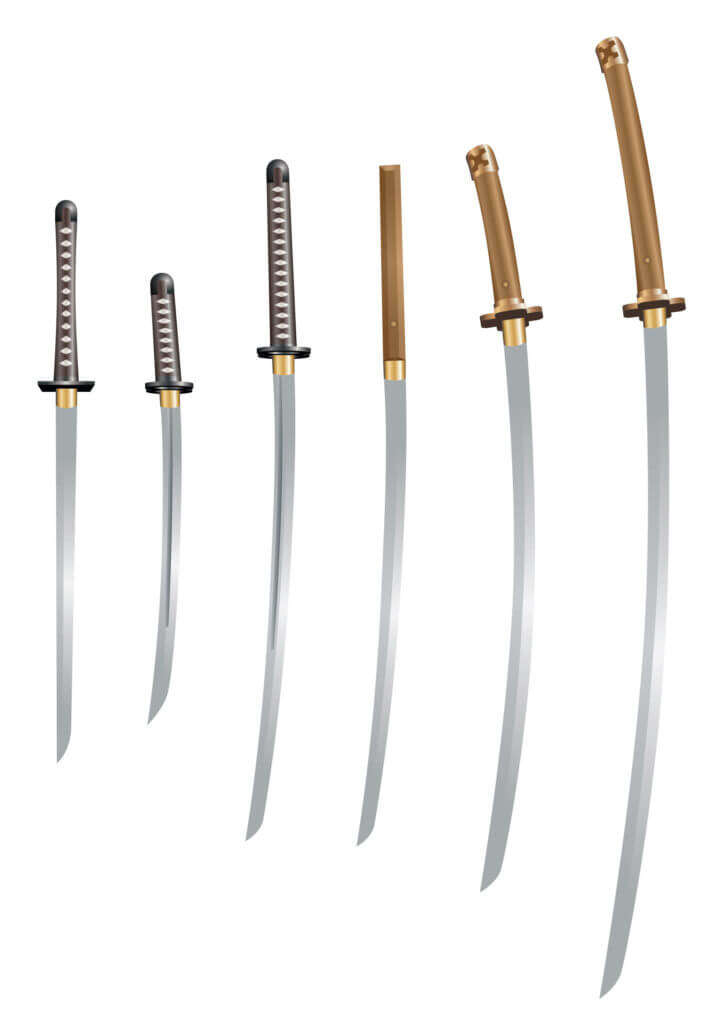
Einen Anhaltspunkt für den korrekten Namen der jeweilgen japanischen Schwertart bietet die Länge der Klinge, hier gibt es allerdings Überschneidungen zwischen „kurzen Langschwertern“ und „langen Kurzschwertern“, die die gleiche Länge haben können.
Letztendlich ist die Montierung (Koshirae) entscheidend für die Benennung.
Bevor wir die entsprechenden Namen nennen, noch die wichtige Basisinformation, dass die Ausdrücke Katana/Gatana/To/Chi alle dem japanischen Schriftzeichen 刀 entsprechen. Die meisten Namen aus der Welt der japanischen Schwerter Arten setzen sich aus einem Zusatz und diesem Schriftzeichen zusammen, z.B. 太刀= Tachi= Ta Chi, was großes Schwert bedeutet.
Jokoto (古代刀)
Jokoto ist ein Überbegriff für alle japanische Schwerter Arten der Antike. Diese waren die gebräuchlichen Schwerter bevor die gebogenen und einschneidigen Schwerter wie Tachi und Katana in Mode kamen.
Bereits in der Steinzeit gab es solche Schwerter, die meisten Exemplare stammen aus der Bronzezeit. Die ersten, gefundenen Bronzegegenstände stammen in Japan aus dem 3. Jahrhundert vor Christus.
Jokoto sind in der Regel gerade Schwerter, die hauptsächlich zu Stechen vorgesehen sind.
Typische Beispiele für Jokoto sind die Schwertarten Chokuto und Tsurugi.
Lange galt die Meinung, dass die Schwerter ausschließlich aus Korea und China importiert wurden. Bei Ausgrabungen im späten 20. Jahrhundert in Japan wurden aber auch Gussformen für solche Schwerter gefunden, was dafür spricht, dass die Japaner einige japanische Schwerter Arten bereits in der Antike selbst herstellten.
Chokuto (直刀)
Das Chokuto ist ein gerades Schwert, das bereits in Gräbern aus dem vierten und fünften Jahrhundert in Japan gefunden wurde. Zum Beispiel in dem berühmten Grabmal von Tenno Nintoku aus dem 5. Jahrhundert. Diese sehr frühen Modelle waren größtenteils Importe aus China, die ihren Weg nach Japan gefunden haben. Sie besitzen bereits eine einschneidige Klinge und können somit als direkter Vorläufer der späteren Schwerter der Samurai betrachtet werden. Wann genau die Herstellung dieser Schwertart in Japan begann, ist leider nicht bekannt. Die ersten Schwerter waren eine reine Kopie von chinesischen Schwertern aus dem gleichen Zeitraum. Mit der Zeit entwickelten sich in Japan daraus aber die späteren Schwerter der Samurai.
Tsurugi (剣)
Seinen Ursprung hat es vermutlich in China und es wurde in Japan ab Mitte des siebten Jahrhunderts eingesetzt. Dieses Schwert hatte eine gerade, doppelschneidige Klinge. Es entspricht deshalb nicht der Form der späteren Schwerter der Samurai und wurde in Japan nicht so lange verwendet wie in China. Mit der Entwicklung von gekrümmten Klingen hat diese Art von Schwert in Japan seine Bedeutung verloren.
Tachi (太刀)
Nach der Legende hat der Schmied Amakuni bereits im 8. Jahrhundert das erste Schwert dieser Art geschmiedet. Während politischen Veränderungen im alten Japan entstand um den Beginn des 10. Jahrhunderts die neue Klasse der Samurai, die Ihre Machtansprüche durch kriegerische Handlungen wahrten. Als Hauptwaffe wählten die Samurai einschneidige Schwerter mit gebogener Klinge. Von da an entwickelten sich die legendären Schwerter der Samurai stetig weiter. Die Schwerter der Samurai werden dabei in unterschiedliche Schwert-Epochen Koto Katana, Shinto Katana, Shin-Shinto Katana und Gendaito Katana unterteilt. Gegebenenfalls vertiefen wir diesen Punkt an einer anderen Stelle. Er ist allerdings zu umfangreich, um ihn hier mit ab zu handeln.
Die meisten frühen Samuraischwert-Schwertklingen besitzen eine Klingenlänge von 120 cm und mehr und waren Tachi. Unter Tachi werden lange, massive, gekrümmte japanische Schwerter verstanden. Tachi bedeutet übersetzt „großes Schwert“. Es wurde hauptsächlich von Reitern eingesetzt und ist von Größe und Beschaffenheit dafür ausgelegt vom Pferd aus zu kämpfen. Charakteristisch ist die relativ große Krümmung der Klinge und der gekrümmte Griff. Es wird mit der Schneide nach unten am Gürtel getragen.
Am kaiserlichen Hofe von Japan gehörte das Tachi zur vorgeschriebenen, zeremoniellen Kleidung. Es gilt als die nobelste Gestaltung unter den japanischen Schwerter Arten.
Uchigatana (打刀)
Das Uchigatana etablierte sich im 14. Jahrhundert. Das Uchigatana ist kleiner dimensioniert als das Tachi. Deshalb ist es für Kämpfe auf kleinem Raum (z.B. in Gebäuden) geeignet. Es wurde mit der Schneide nach oben am Gürtel getragen und konnte so wesentlich schneller gezogen werden. Im Gegensatz zum Tachi ist beim das Uchigatana der Griff gerade. Die Bezeichnung Uchigatana wird heute häufig gleichgesetzt mit dem Name Katana verwendet.
Katana (刀)
Mit der Zeit wurde die Klingen der ursprünglichen Tachi immer kürzer für eine bessere Handhabung. Eine weitere Entwicklung war, dass die Schwerter mit der Schneide nach oben am Gürtel getragen werden. Das sind die Merkmale des Katana. Katana wurden 14. Jahrhundert und vor allen Dingen in der Friedensperiode ab dem 17. Jahrhundert gebräuchlich. Es wird am Gürtel getragen und besitzt eher einen geraden Griff. Die Länge beträgt grob gesagt ca. 100 cm.
Das Wort Katana ist eine allgemeine Bezeichnung für japanische Schwerter, wie in der Einleitung geschrieben. Trotzdem wird es außerhalb Japans vor allem für diese eine Art von Samuraischwert benutzt.
Während das vorherige Schwert Tachi für Reiter ausgelegt ist, ist das Katana für den Kampf am Boden optimiert.
Es ist die legendäre Primärwaffe des Samurai. Es ist heute die meist beachtete Schwertart unter den Schwertern der Samurai.
Wakizashi (脇差)
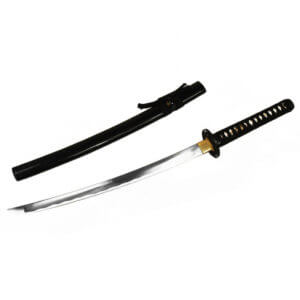
Als Wakizashi bezeichnet man das etwas kürzere Schwert des Samurai. Es ist ungefähr im gleichen Zeitraum entstanden, wie das Katana. Es ist eine Sekundärwaffe und wird einhändig geführt, deshalb bildeten quasi den direkten Nachfahren des Uchigatana.
Die Länge beträgt grob ca. 70 cm. Die Schneide zeigt beim Tragen am Gürtel nach oben.
Besonders während der Friedensperiode ab dem frühen 17. Jahrhundert war dieses Schwert sehr populär und wurde von den Samurai zusammen mit dem Katana getragen. Andere Gesellschaftsschichten trugen andere japanische Schwerter Arten, wie das Wakizashi als einzelnes Schwert.
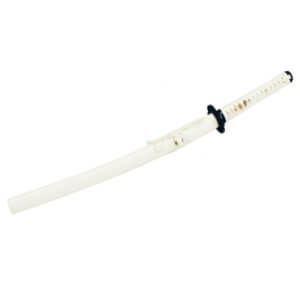
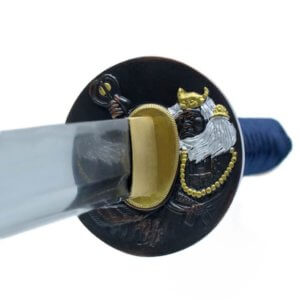
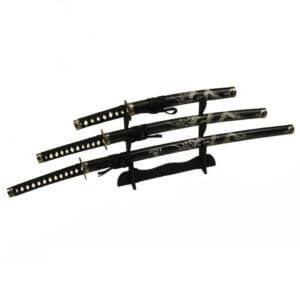
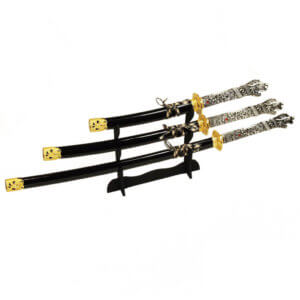
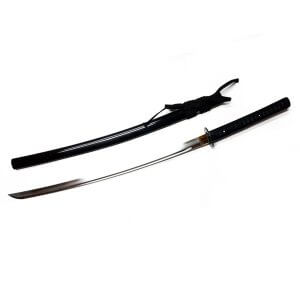
Modern produzierte Katana & Wakizashi in unserem Onlineshop

Daisho (大小)
Daisho (wörtlich übersetzt „groß/klein“) wird in der japanischen Sprache für ähnliche Paare aus einem kleinen und einem großen Gegenstand verwendet. Im Zusammenhang mit den japanischen Schwerter Arten bezeichnet es ein Schwertpaar, das aus einem langen und einem kurzen Schwert besteht.
Es galt als Statussymbol der Samurai, da es nur ihnen erlaubt war dieses Schwertpaar in der Öffentlichkeit zu tragen. Ein Daisho besteht aus Daito und Shoto:
Daito (大刀)
Das Daito (=“langes Schwert“) ist also das längere Schwert des Schwertpaares. Häufig bildet das Katana als das längere Schwert des Daisho. Das längere Schwert war in der Regel die Primärwaffe des Kämpfers.
Shoto (小刀)
Das Shoto (=“kleines Schwert“) ist also das kürzere Schwert des Paares, das als „Nebenwaffe“ verwendet wurde. Häufig wurde ein Wakizashi als Shoto verwendet.
Tanto (短刀)
Bedeutet übersetzt kurzes Schwert und kann als Messer oder Dolch angesehen werden. Es hat eine Länge von ca. 30 cm. Samurai trugen es häufig als zusätzliche Waffe zu den normalen Schwertern.
Das Tanto wurde bereits mit dem Tachi als Zweitwaffe getragen und gehört deshalb zu den ältesten unter den japanischen Schwerter Arten.
Zusätzlich wurde es auch von vielen Zivilisten getragen.
Das Ende der gesellschaftlichen Bedeutung
Es war eins der Privilegien der Samurai das Daisho in der Öffentlichkeit tragen zu dürfen. Während der langen Friedenszeit ab dem frühen 17. Jahrhundert avancierten Samuraischwerter und ihre Gestaltung zum Statussymbol. Mit den Schwertern wurde also nach Außen gezeigt, wer man ist. Deshalb rückte der kriegerische Nutzen in den Hintergrund und der künstlerische Aspekt rückte mehr in den Vordergrund.
Im Zuge der Meiji-Restauration im 19. Jahrhundert verloren die Samurai ihre Sonderprivilegien und nun es war nicht mehr erlaubt die Schwerter in der Öffentlichkeit zu tragen.
Deshalb wurden die Schwerter von nun an Zuhause verwahrt und waren nicht mehr das öffentliche Erkennungszeichen einer kompletten Gesellschaftsschicht.
Damit ging die frühere öffentliche Bedeutung aller japanischen Schwerter Arten verloren.
Gun-to (軍刀)/ Kyu-gunto(旧軍刀)/ Shin-gunto (新軍刀)
Gunto ist ein Überbegriff für alle japanischen Schwerter Arten Schwerter des Militärs.
Während der Industrialisierung Japans im 19. Jahrhundert blieb der ursprüngliche Schwertstil auf der Strecke. Nachdem sie von westlichen Militärberater ausgebildet wurden, nutzten die kaiserlichen Streitkräfte Schwerter mit vorwiegend westlichem Design: Relativ gerade Schwerter mit einem säbelähnlichem Design. Auf japanisch werden diese Waffen als Kyu-gunto oder „alte Armee-Schwerter“ bezeichnet.
Während der 1930er Jahre verbreitete sich der Nationalismus über Japan. Dieser wurde von der faschistischen Regierung Japans angefeuert, welche sich entschlossen hatte, die Kyu-Gunto durch eine modernisierte Version des Samuraischwertes zu ersetzen, um ihren Kräften historische / kulturelle Würde zu verleihen.
Diese neue Waffe ist das Shin-Gunto oder das „neue Armee-Schwert“. Es war für den Offiziers-Einsatz in der kaiserlichen japanischen Armee und Marine vorgesehen.
Das Ende der militärischen Bedeutung
Ab der Mitte des 16. Jahrhunderts waren Schusswaffen in Japan verbreitet, deshalb verloren Schwerter nach und nach ihre militärische Bedeutung.
Das japanische Militär trug aber selbst im zweiten Weltkrieg teilweise noch Schwerter als Beiwaffe, eher aus symbolischen Gründen.
Nach der Niederlage Japans im zweiten Weltkrieg war Japan durch die USA besetzt. Das amerikanische Militär hatte es sich zum Ziel gesetzt als symbolischen Akt alle Waffen im Land zu vereinnahmen.
In diesem Zuge wurden auch alle Schwerter des japanischen Militärs eingezogen, somit endete die militärische Bedeutung des Samuraischwertes abschließend.
Bei der Aktion wurden sehr viele Schwerter aus Japan in die USA gebracht oder zerstört. Zum Glück wurden der ursprüngliche Plan nicht komplett durchgeführt, trotzdem sind viele kulturell wertvolle Kunstobjekte verloren gegangen, wie das Honjo Masamune, dem wir einen eigenen Artikel gewidmet haben.
Es haben aber auch einige Exemplare überstanden, wie die legendären Tenka-Goken.
Entwicklung seit der Nachkriegszeit
In der Zeit der Besatzung Japans war es verboten Schwerter zu produzieren. Dadurch kam es zu einer Unterbrechung der Linie und das Wissen über die Herstellung von Klingen konnte nicht nahtlos weiter gegeben werden. Nach dem Ende der Besatzung hat die Produktion von Schwertern wieder gestartet, aber sehr streng reguliert.
In Japan dürfen nur extra lizenzierte Schwertschmiede Schwerter nach traditioneller Methode fertigen und die Menge, die ein Schmied produzieren darf, ist begrenzt.
Diese strenge Regulierung führt zu der hohen Qualität und den hohen Preisen, die Schwerter aus Japan haben. Durch die Regulation sind die Möglichkeiten und Innovationsperspektiven aber auch sehr stark eingeschränkt.
Seit den 90er Jahren des 20. Jahrhunderts gab es die ersten Firmen, die sich auf die Produktion von Samuraischwertern außerhalb Japans spezialisiert haben.
Außerhalb Japans können Klingen ohne strenge Regulierung und somit ausschließlich nach den Bedürfnissen des Marktes produziert werden.
Deshalb gibt es heutzutage unterschiedliche Entwicklungsströme:
Zum einen der streng regulierte Markt in Japan, der sehr hochwertige Schwerter hervor bringt und deshalb vor Allem für Sammler und gut betuchte Liebhaber interessant ist.
Zum anderen der freie Markt außerhalb Japans, der mit angepassten Produktionsmethoden Schwerter herstellt. Dieser Markt bietet die Möglichkeit Schwerter zu Preisen zu bekommen, die in Japan nicht möglich wären. Aber durch die geringe Regulierung gibt es auch viele Produkte von schlechter Qualität am Markt. Zudem ist der Markt übersät von Fehlinformationen, zum Beispiel über Folding and Structure von Schwertklingen. Deshalb ist es wichtig von einem Händler mit (echter) Fachkompetenz zu kaufen. Denn selbst Marken, die sich durch Marketing einen guten Ruf aufgebaut haben, sind häufig nicht das Wahre. Günstige Samuraischwerter mit gutem Preis-Leistungsverhältnis bei uns im Shop buy.
Weitere, häufig verwendete Namen
Im vorangegangenen Text haben wir den Werdegang des japanischen Schwertes grob beschreiben. Natürlich gibt es noch viele andere Bezeichnungen für japanischen Schwerter Arten.
Noch ein mehr häufig verwendete Begriffe:
Bokken (木剣) und Bokuto (木刀)
Ein Trainingsschwert aus Holz. Die Bezeichnung setzt sich aus dem Wort Boku (Holz) und Ken oder To für Schwert zusammen. In Japan ist der Begriff Bokuto verbreitet, während sich außerhalb Japans die Bezeichnung Bokken durchgesetzt hat.
Iaido (居合道)
Iaido ist die „Kunst des Schwertziehens“. Eine Kampfsportdisziplin, die sich mit den unzähligen Wegen ein japanisches Schwert zu ziehen beschäftigt.
Iaito (居合刀)
Ein Trainings-Schwert mit stumpfer Klinge aus Metall, deshalb ist es ausschließlich zum Üben gedacht. Die Klingen sind häufig aus einer Aluminium-Mischung gefertigt im Gegensatz zu Schwertern aus den gängigen Stahlsorten. Es ist relativ leicht, um die Gelenke beim Training zu entlasten, was besonders für Anfänger wichtig ist. Der Begriff wird gerne und häufig mit dem ähnlichen Begriff Iaido verwechselt.
Kendo (剣道)
Bedeutet übersetzt „der Weg des Schwertes“. Eine Kampfsportart bei der nach moderner Auslegung das Kämpfen mit einem Schwert trainiert wird.
Kenjutsu (剣術)
„Die Kunst des Schwertes“. Eine Kampfkunstdisziplin, die nach traditionellen Maßstäben der Umgang mit einem Schwert lehrt.
Nihonto (日本刀)
Setzt sich aus den Begriffen Nihon=Japan und To=Schwert zusammen. Also ein Überbegriff für alle Schwerter aus Japan. Über Nihonto haben wir einen eigenen Beitrag, der here zu finden ist.
Nodachi (野太刀)
Nodachi bedeutet übersetzt Feld-Tachi, also großes Feld-Schwert.
Odachi (大太刀)
Bedeutet übersetzt großes Tachi, was als komplett übersetzt großes großes Schwert ergibt. Im Grunde also ein größeres Tachi, wobei es keine genaue Definition gibt, ab wann ein normales Tachi als Odachi zählt.
Kodachi (小太刀)
Setzt sich aus den Begriffen Ko (=klein) und Tachi zusammen. Es ist also ein kleines Tachi mit ca. 70 cm Länge. Damit hat es ungefähr die Größe eines Wakizashi. Das Kodachi wird wie ein Tachi mit der Klinge nach unten gerichtet am Gürtel getragen.
Shinken (新刀)
Ein echtes Schwert mit scharfer Klinge. Es ist das Gegenstück zum Iaito. Das Iaito hat eine stumpfe Klinge aus leichtem Metall, während beim Shinken die Klinge aus Stahl besteht und scharf ist. Es wird in einige Kampfkünsten auch von Fortgeschrittenen im normalen Training benutzt. Solche Schwerter sind auch für Schnittübungen geeignet.
In diesem Video zeigen wir einige japanische Schwerter Arten:
Neben der Geschichte des Schwertes gab es in der japanischen Geschichte auch unzählige herausragende Samurai und Anführer. Unsere Top 10 der herausragendsten Persönlichkeiten finden Sie in diesem Contribution.

 German
  English
  French