In diesem Beitrag erklären wir, warum es manchmal sogar schlecht ist, wenn ein Schwert aus gefaltetem Stahl besteht!
Warum wird der Klingenstahl für Samuraischwerter gefaltet?
Das Falten dient der Verbesserung der Eigenschaften des traditional Tamahagane Stahls. Durch das Falten werden Verunreinigungen beseitigt und die Verteilung der Bestandteile innerhalb des Stahls wird mit jedem weitere Schritt gleichmäßiger, bis zur nahezu vollständigen Gleichverteilung (Homogenität).
Bei traditionellen Stahlsorten haben gefaltete Klingen somit wesentlich bessere Eigenschaften als Klingen, die nicht gefaltet sind. Bei industriellem Monostahl verschlechtert das Falten die Qualität eher, wie weiter unten erläutert wird.
Wie oft wurde das beste Katana gefaltet?
Üblicherweise wird der Stahl für die Klinge eines Katana ca. 10 bis 15 mal gefaltet. Der Stahl muss eigentlich nur so oft gefaltet werden, bis die inneren Bestandteile gleichmäßig verteilt sind. Bei jedem Falt-Schritt gibt der Stahl Kohlenstoffgehalt ab. Nach der Gleichverteilung wird nur noch gefaltet, um einen bestimmten Kohlenstoffgehalt zu erreichen. Wie oft der Stahl für eine Klinge gefaltet wird, ist vor allem von der Beschaffenheit des verwendeten Rohmaterials abhängig. Es gilt also keinesfalls die Regel, dass mehr Faltungen oder Lagen ein besseres Schwert ausmachen!
Wie viele Lagen hat ein Schwert aus gefaltetem Stahl?
Die Anzahl ergibt sich daraus, wie oft der Stahl gefaltet wurde. Um die Anzahl der Lagen zu berechnen, wird die Zahl 2 mit der Anzahl der Faltvorgängen potenziert.
Examples:
5x gefaltet: 25= 32 Lagen
10x gefaltet: 210= 1024 Lagen
15x gefaltet: 215= 32768 Lagen
20x gefaltet: 220= 1048576 Lagen
Die Anzahl der Lagen gibt wie zuvor erläutert keine Aussage über die Qualität der Klinge!
Muss mein Schwert aus gefaltetem Stahl sein?
Das ist ja quasi die Kernfrage der ganzen Sache und das kommt vor allen Dingen auf den Stahl an, der für die Herstellung verwendet wird.
Traditionell produzierter Tamahagane Stahl sollte auf jeden Fall gefaltet sein, um die oben genannten Verbesserungen zu erreichen. Genormter Mono-Industriestahl muss nicht zwingend gefaltet werden, da das Falten keine Verbesserung mit sich bringt. Ähnlich wie bei der Blade construction gilt bei diesem Stahl eher, dass weniger mehr ist.
Falten bei mittelpreisigen Schwertern
Mittelpreisige Schwerter (alles bis ca. 2000 Euro) sind meist aus industriellem Mono-Normstahl gefertigt. Eine kurze Beispielliste von industriell gefertigten Stahlsorten finden Sie in diesem Beitrag über Stahlsorten.
Bei diesen Schwertern wird von einigen Verkäufern suggeriert, dass eine Klinge aus gefaltetem Stahl eine höhere Qualität hätte, als Klingen aus nicht gefaltetem Stahl. Genau das Gegenteil ist aber der Fall!
Industrieller Monostahl hat keine Verunreinigungen und ist bereits weitestgehend homogen. Falten ist also grundsätzlich nicht nötig. Das Falten senkt nur noch den Kohlenstoffgehalt des Stahls und damit die Härte.
Wenn industrieller Stahl schlecht gefaltet wird, kann das zusätzlich die Qualität der Klinge verringern(beispielsweise durch Lufteinschlüsse usw.)! Bei genormtem Monostahl gilt also die Devise, dass eine sauber gearbeitete, nicht gefaltete Klinge bessere Eigenschaften hat als eine Klinge, die gefaltet ist. Selbst wenn dieser Stahl perfekt gefaltet wird.
Bevor man sich ein sehr günstiges gefaltetes Schwert aus industriellem Monostahl leistet, würden wir im Hinblick auf die Qualität in diesem Fall ein Schwert aus nicht gefaltetem Stahl empfehlen!
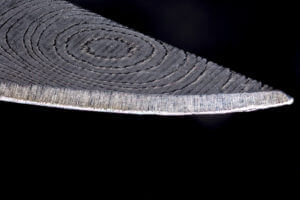
Gefalteter Stahl hat trotzdem noch viele Fans, weil sich durch das Falten ein ansprechendes Muster ergeben kann. Wie viel einem das Wert ist, muss natürlich jeder für sich selbst abschätzen.
Lassen Sie sich also nicht mit Falschinformationen unnötig Geld aus der Tasche ziehen.
Schwerter zu angemessenen Preisen finden Sie in unserem Shop.

 German
  English
  French