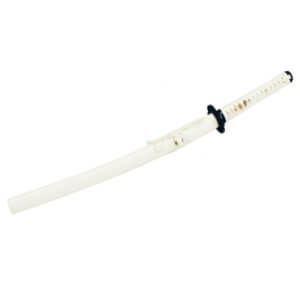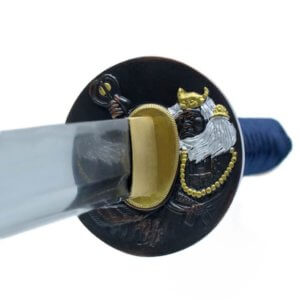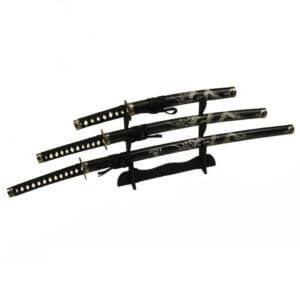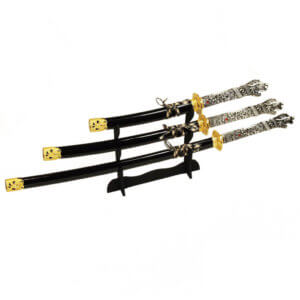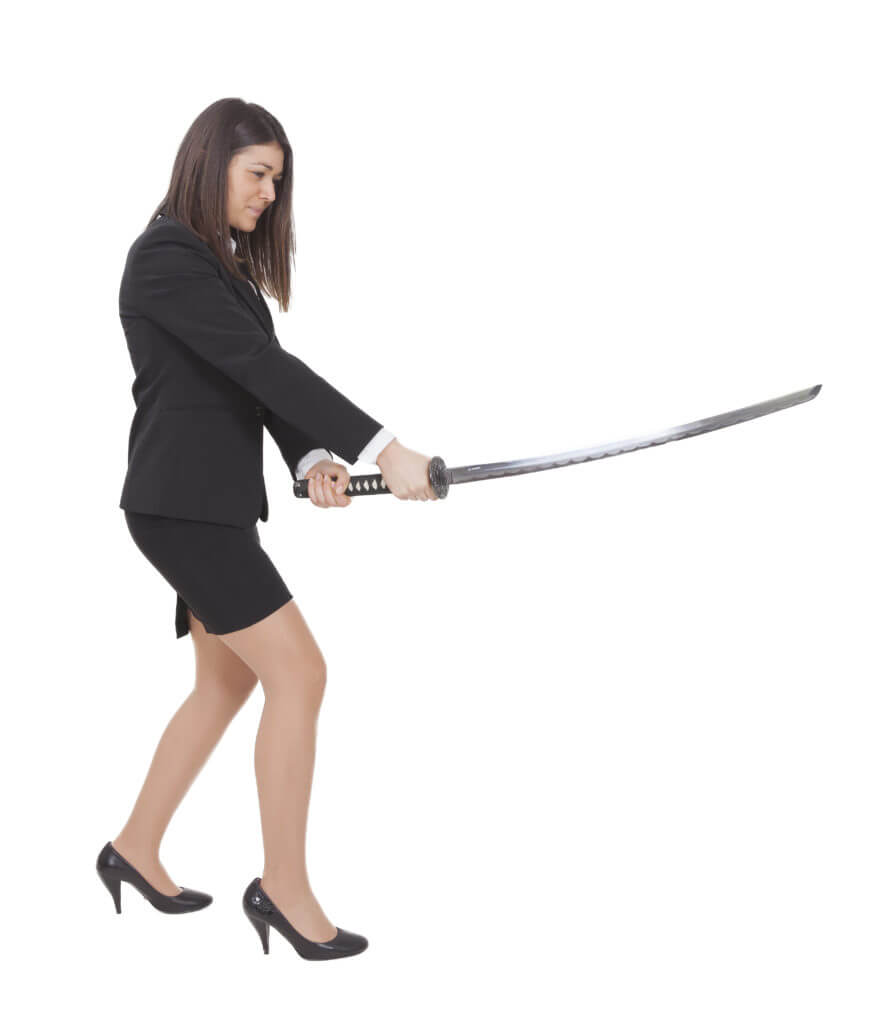
Der Mythos um die Frage, ob ein Katana durch Stahl schneiden kann, hält sich hartnäckig. Grund dafür sind sicherlich auch die vielen Schwertkampfszenen, insbesondere aus dem Manga und Anime Genre, in denen mit dem Katana so gut wie alles durchgeschnitten wird. Doch ist es wirklich möglich, mit einem Samuraischwert durch echten Stahl zu schneiden?
Stahl gegen Stahl
Um die diese Frage zu klären, sollte man sich vorerst bewusst machen, dass die Klinge jedes Katana selbst aus Stahl besteht. Hierbei gibt es jedoch viele unterschiedliche Legierungen und Herstellungsweisen, weshalb Stahl nicht gleich Stahl ist. Die Qualität und Härte des Stahls kann stark variieren. Unser Artikel zum Klingenstahl bei Samuraischwerten erläutert die am häufigsten verwendeten Stahlsorten.
Nun da geklärt ist, dass es sich bei dem Duell „Katana gegen Stahl“ um das Duell „Stahl gegen Stahl“ handelt, bleibt die Frage, ob es dennoch möglich ist, mit einem Katana Stahl zu durchtrennen.
Reality check
Wie es geht zeigt uns der „moderne Samurai“ Isao Machii im japanischen Fernsehen. Dort zerschneidet er mit seinem Katana erst ein dünnes Eisenrohr, bevor er in nur einem Schnitt eine 0,4mm dicke, hochkant aufgestellte Stahlplatte durchtrennt.
Dies ist der relevante Ausschnitt aus der Show:
Für einen sauberen, geraden Schnitt ist neben dem richtigen Katana auch die richtige Technik entscheidend. Diese besteht aus dem Treffen des perfekten Schnittwinkels, der passenden Geschwindigkeit sowie dem richtigen Maß an Kraft. Diese Techniken können im Rahmen des Tameshigiri trainiert und perfektioniert werden. Hierbei werden aber in der Regel Tatami Omote, gewickelten Reisstrohmatten, anstatt von Stahl verwendet.
Das Zantetsuken
Der Herausgeber des Videos nennt dieses Schwert Zantetsuken. Dieser Begriff leitet sich aus den 3 Wörtern Zan, Tetsu und Ken her.
- 斬 (zan) bedeutet „schneidend“ oder „enthauptend“
- 鉄 (tetsu) bedeutet „Eisen“
- 剣 (ken) bedeutet schließlich „Schwert“
Conclusion
Es ist möglich mit einem Katana dünnen Stahl zu durchschneiden. Das durchtrennen von ganzen Eisenträgern, wie es im Film zu sehen ist, kann jedoch definitiv als Fiktion angesehen werden.

 German
  English
  French