Industrieller Stahl wird heutzutage gerne für die serielle Fertigung von Schwertklingen verwendet. Der häufigste Vertreter hierbei ist der Kohlenstoffstahl. Die Vorteile des industriellen Stahls liegen auf der Hand:
- Der Stahl steht fast unbegrenzt zur Verfügung
- Er hat sehr gute Eigenschaften
- Die Zusammensetzung ist genormt und deshalb nahezu identisch
- Der Stahl ist günstig
- Die Weiterverarbeitung ist vergleichsweise einfach
Für Schwertlingen für den aktiven Einsatz eignet sich eher nicht-rostfreier Stahl (z.B. Kohlenstoffstahl). Der Unterschied zu rostfreiem Stahl wird in diesem Beitrag erläutert. Alle Klingen aus nicht-rostfreiem Stahl benötigen regelmäßige Care.
In diesem Segment sind viele Stahlsorten für die Herstellung von Schwertklingen geeignet. Diese hier werden aber am häufigsten verwendet:
Carbon steel
Oder auch Carbonstahl, Karbonstahl, C-Stahl, AHS (Advanced High Strengh)-Stahl, AHSS oder HCS (high carbon steel). Im Grunde beschreiben aber alle Namen aber das selbe Material.
Kohlenstoffstahl bezeichnet einen niedrig legierten Stahl, der außer Eisen Kohlenstoff (bis zu 2,1%) und kaum andere Legierungselemente enthält.
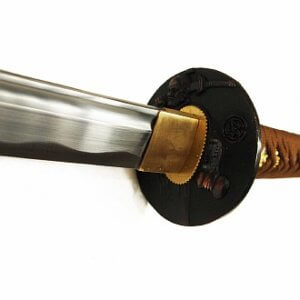
1045 Kohlenstoffstahl
1045er Kohlenstoffstahl besitzt einen Kohlenstoffgehalt ca. 0.45 Massenprozent. Mit der richtigen Wärmebehandlung wird bei diesen Klingen in der Regel eine Härte um 45 HRC erreicht.
Vorausgesetzt, dass eine Klinge eine richtige Angel besitzt, keine reine Deko-Klinge ist und die Wärmebehandlung ordentlich erfolgt ist, „überleben“ Schwerter aus diesem Material Schnitttests. Auf Grund der spezifischen Stahleigenschaften würden wir dafür aber anderen Stahl empfehlen.
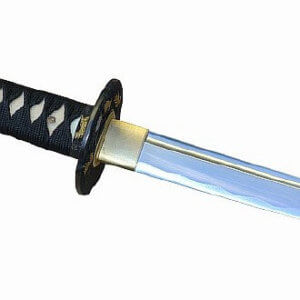
1060 Kohlenstoffstahl
Dieser Stahl besitzt einen Kohlenstoffgehalt ca. 0.6 Massenprozent. Damit kann eine Härte von gut 50 HRC erreicht werden. Das Material ist für Klingen für Schnitttests geeignet und vergleichsweise günstig.
1095 Kohlenstoffstahl
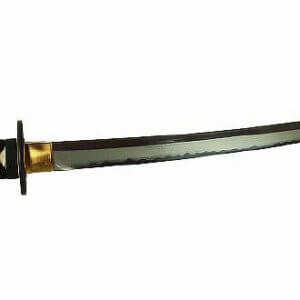
Dieses Material hat einen hohen Kohlenstoffgehalt, der den Stahl hart macht. So erreicht er eine Härte von ca. 60 HRC. Zusätzlich kommt häufig eine Differenzialhärtung zum Einsatz.
Die korrekte Verarbeitung vorausgesetzt, eignet sich dieser Stahl gut für Klingen für Schnitttests, da er sich fein ausschleifen lässt und sehr hart ist.
Spring steel
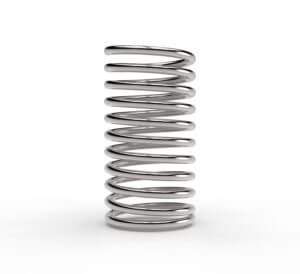
Diese Bezeichnung ist genauso wie Kohlenstoffstahl ein Überbegriff für mehrere Stahlsorten. Diese haben eine hohe Elastizität. Das bedeutet, dass sie dazu neigen Ihre ursprüngliche Form anzunehmen, wenn sie verformt werden. Das qualifiziert diesen Stahl natürlich für Schnitttests, bei denen sich die Klinge schnell mal verbiegt, wenn der Schnitt unsauber ausgeführt wird.
L6 oder L-6
Aus L6 werden L6 Bainit (Englisch: Bainite) Klingen gefertigt. Diese Klingen haben sehr gute Eigenschaften, sind hart, extrem scharf, langlebig. Sie vereinen viele positiven Eigenschaften, die man sich für ein Schwert wünscht.
Allerdings ist die Wärmebehandlung dieses Materials sehr komplex und nur wenige können den Herstellungsprozess wirklich meistern.
Haward Clark hat den Herstellungsprozess perfektioniert und fertigt Klingen auf Bestellung, die aber relativ teuer sind.
MAS ist auch in der Lage L-6 Bainite Schwerter in guter Qualität zu fertigen.
Klingen anderer Hersteller aus diesem Material würden wir nach heutigem Stand nicht empfehlen.
T-10 Stahl
T-10 ist von seinen Eigenschaften her fast identisch mit 1095 Kohlenstoffstahl. Die Wärmebehandlung und Herkunft des Materials ist aber unterschiedlich.
Grundsätzliche Informationen über einige Stahlsorten:
Weitere Informationen über die chemische Zusammensetzung von Stahl für Schwertklingen finden Sie in unserem Beitrag Stahlsorten im Vergleich.

 German
  English
  French